Urgent: Urge Your Representative to Co-Sponsor Safety Net Provider Drug Pricing Protection Act

Although the original 340B Rebate Pilot was dismissed in the U.S. District Court for Maine, the threat of a potential rebate model still exists. This model would require CHCs to pay full prices up front for drugs and hope for a rebate from the manufacturer. This is unsustainable for CHCs and would interrupt the regular 340B funds they receive.

The funds sourced from the reduced prices of the 340B Discount Drug Program are filtered directly back into the CHCs with the purpose of providing affordable healthcare. Should these funds be subject to a rebate model, health centers may face difficult decisions, including reducing services, cutting staff, or even shutting down centers altogether.

Representative Jack Bergman (MI-1) has introduced a bill that would protect CHCs from the threat of a potential rebate model. This will save CHCs from the extra administrative costs and allow the centers to continue accessing the vital 340B Discount Drug Program funds through direct discounts.

For these reasons, we urge you to send an email to your representative to encourage them to Co-Sponsor this bill in the House of Representatives through this portal.
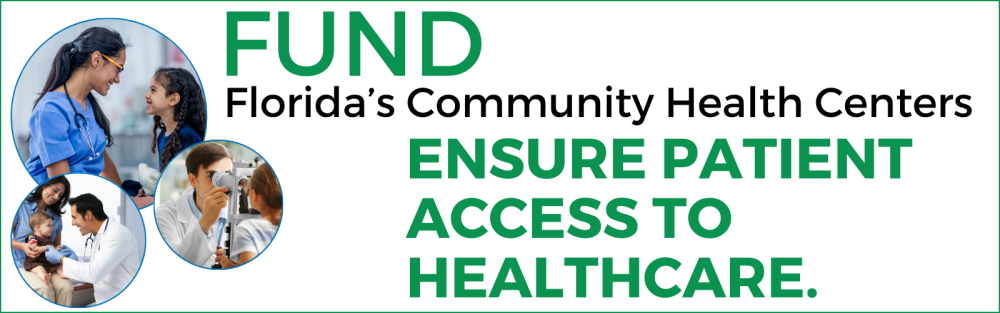
Action Needed: Protect Community Health Center Funding Before December 31

All federal funding for Community Health Centers (CHCs) is set to expire on December 31, 2026, when the current Consolidated Appropriations Act of 2026 ends. Approximately $6 billion in CHC funding is at risk, supporting access to primary and preventive care for millions of patients nationwide. Congress must act to provide long-term, stable funding to protect patient access and avoid disruptions to care. To secure the necessary funding for CHCs, we are asking advocates to contact Congress and urge lawmakers to fund CHCs at $5.8 billion annually for 2 years.

Here’s What You Need to Know About Florida

As the home of high-quality, affordable healthcare services—including primary care, dental care, and behavioral health—Community Health Centers ended 2024 with an economic impact of $3.7 billion across Florida.

Community Health Centers play a critical role in ensuring that all Floridians, especially the most vulnerable populations, have access to healthcare services, and they also offer benefits such as transportation, access to food banks, and other enabling services regardless of the patient’s ability to pay.

Community Health Centers are not just providers; they are employers and educators and contribute to the overall health and well-being of the communities they serve.

Community Health Centers are community-based and patient-directed organizations that deliver comprehensive, culturally competent, high-quality primary healthcare services to all individuals and families, including people experiencing homelessness, agricultural workers, residents of public housing, and veterans.

Community Health Centers integrate access to pharmacy, mental health, substance use disorder, and oral health services in areas where economic, geographic, or cultural barriers limit access to affordable health care. Health centers reduce health disparities by emphasizing coordinated care management for patients with multiple health care needs and by using key quality improvement practices, including health information technology.

Florida’s Community Health Centers (CHCs or FQHCs) have provided high-quality, comprehensive primary care services in medically underserved communities for over 50 years. Florida’s 54 CHCs treat 1.8 million patients at more than 750 locations statewide, including dozens of mobile units and over 100 school-based locations.